
Perspectives on Latent Space
June 18, 2026. On the link between photography, prompting and personalization.
Introduction
Photography and AI art are similar in many ways. Both confer mechanized access to finished visual results; enjoy a troubled relationship between form and content; and have engendered resistance and moral panic in the domain of fine art. In this analogy, the prompt bro is the new photographer, the subject of internet polemics and soi-disant artistic scorn. Is the resistance due to fade, as it did (eventually) for photography? Or does a distrust of the artificial cut deeper than the merely instrumental concerns of those early critics of the photograph?
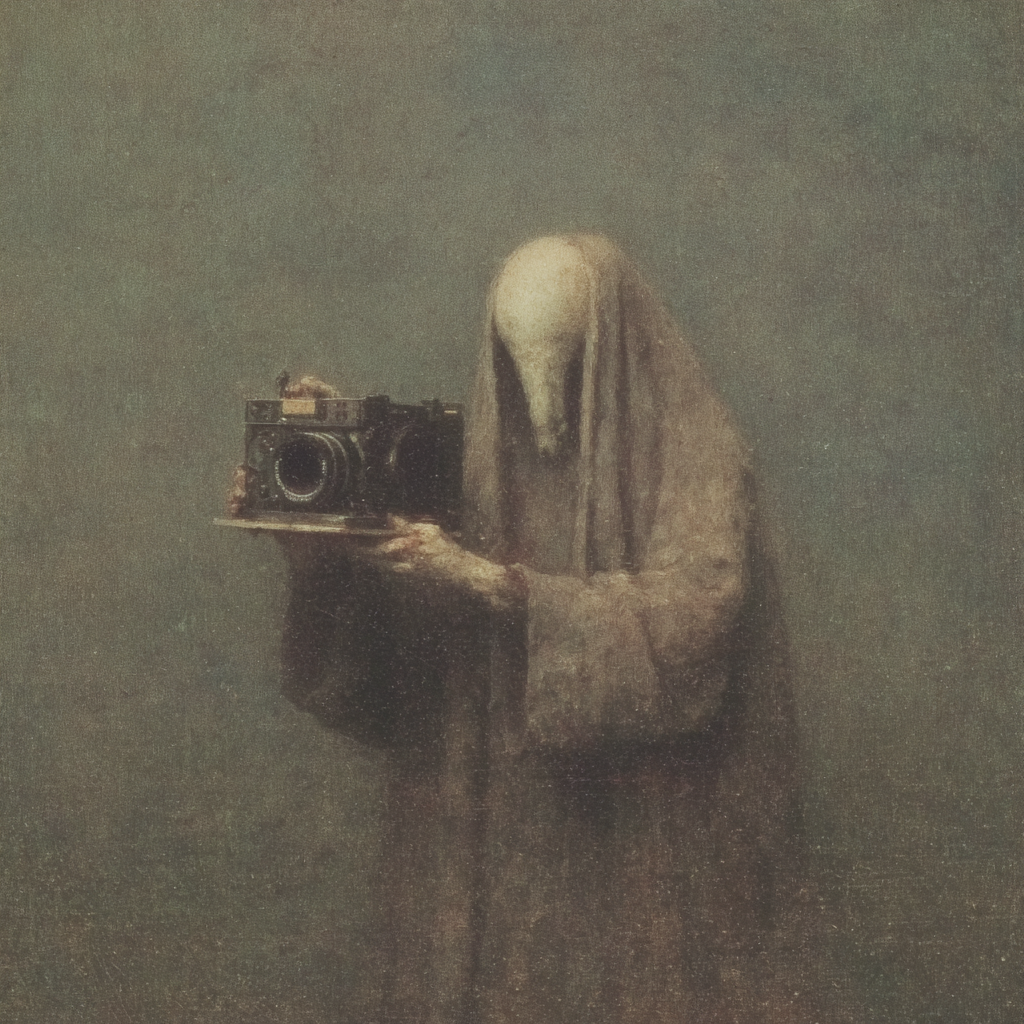
the act of photographing --p --v 7.0 --s 1000
I’m not sure. But I would argue that the parallels are more profound than they first appear, since both represent a chosen perspective on an objective world, with the curious mixture of choice, taste, and instrumentality that entails. For photography, that world is physical; for AI, that world is a latent one inside the model. But that does not make it any less real.
Worlds apart
Photography captures the physical world, the people, streets, mountains, and objects that populate it. A portrait is as easy as aiming your camera at a face; a landscape requires only sunset or a meadow. But as our epigraph warns, a Nikon (or an iPhone) does not a photographer make. This lies in the choice of perspective, not to mention the apparatus of exposure, brightness, contrast, depth of field, shot selection, and so on, that distinguish an artful from an artless shot. But although these techno-instrumental details can be marshalled to show that photography is, after all, a rigorous discipline like painting, I think the perspectival element is the more interesting one. It suggests that art is an interesting point of view, well-conveyed.
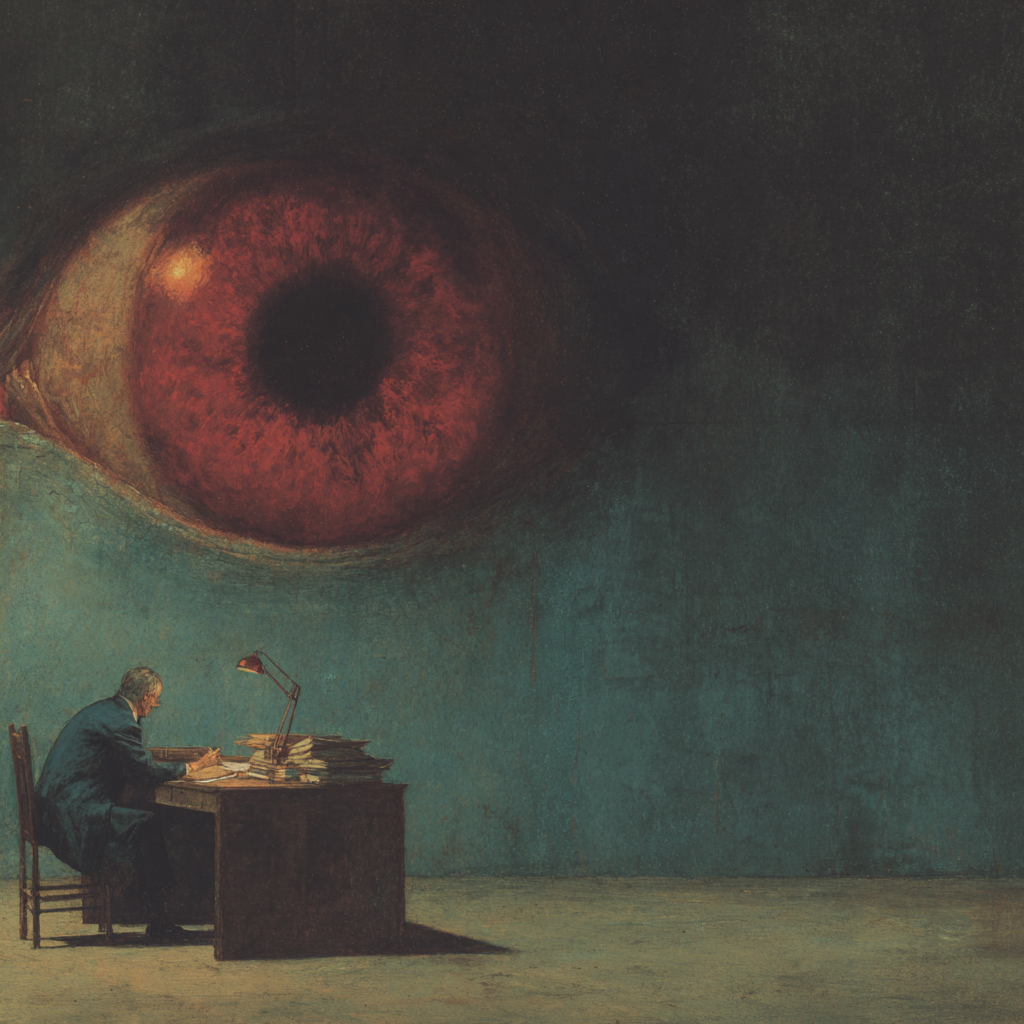
a point of view well-conveyed --p --v 7.0 --s 1000
This leads us to the question of AI art. Like the Nikon, access to generative tools does not an artist make. And although one could argue that full mastery of the generative workflow has an artistic instrumentality to it—and perhaps, if you build the models yourself, it does—for the most part, prompting is the equivalent of the point-and-click or the smartphone camera. You say what you want and the model serves it. We are not going to find the roots of a disciplinary rigour here (see sentences above as an example).
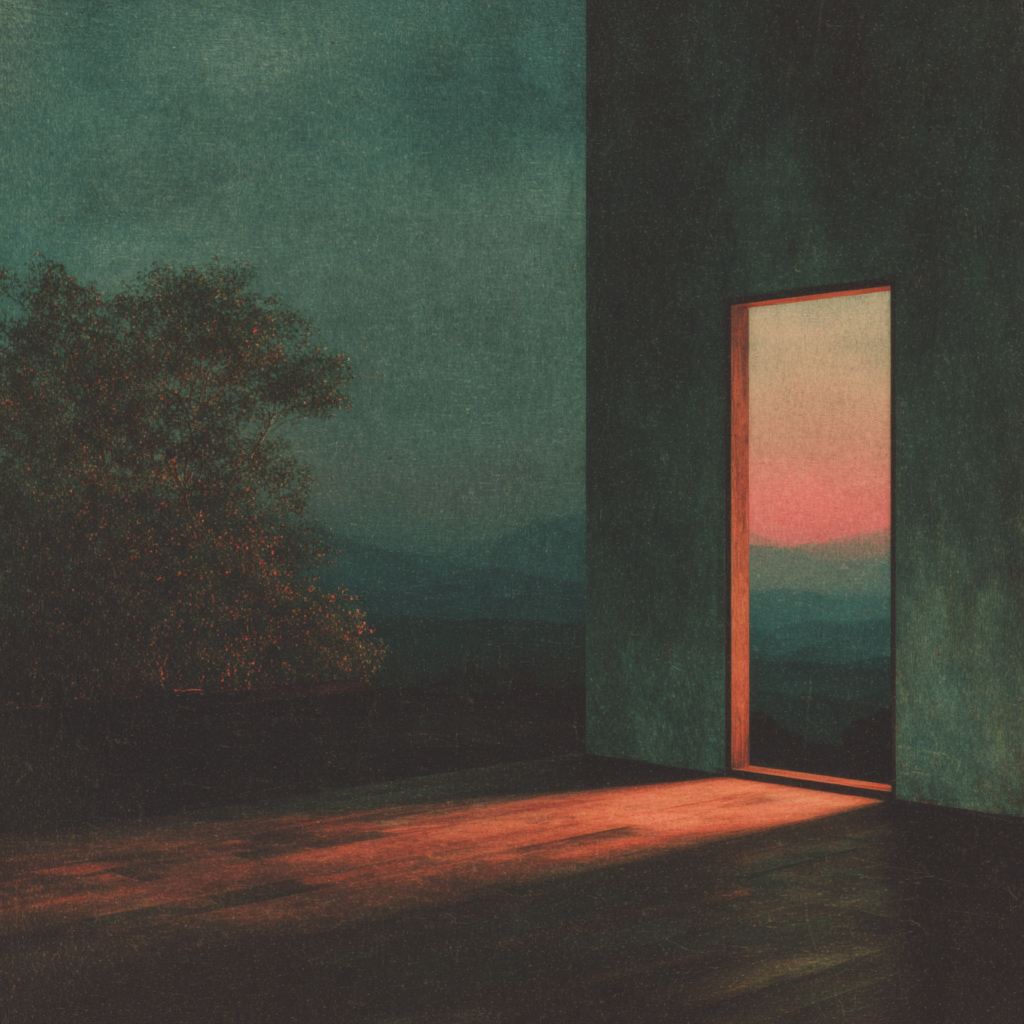
doorway onto the latent world --p --v 7.0 --s 1000
Thus, we turn to the subject, or rather, object of the prompts. The AI interface is a doorway to an objective latent space: the one contained within the model, and realized by its weights and mechanisms rather than any physical objects. One can prompt tritely, invoke cliches, and suffer from poor taste just as in photography, or, with more effort, in painting and the other traditional arts. And in fact one usually does: the accessibility of these generative tools has produced a flood of material which as, art, is desperately mediocre; slop, for lack of a better word. So can perspective redeem generative art the way it did photography?
A personal view
Perspective is a matter of choice and taste. The example images above not only illustrate the ease of prompting, but also the component of taste: the content is simple, but the style is highly personalized, trained on thousands of binary ratings I made, probably an order of magnitude more than needed to distinguish me from any other person on earth. As Midjourney likes to advertise, I can ask for a “face” and it will give me my own bespoke variant:
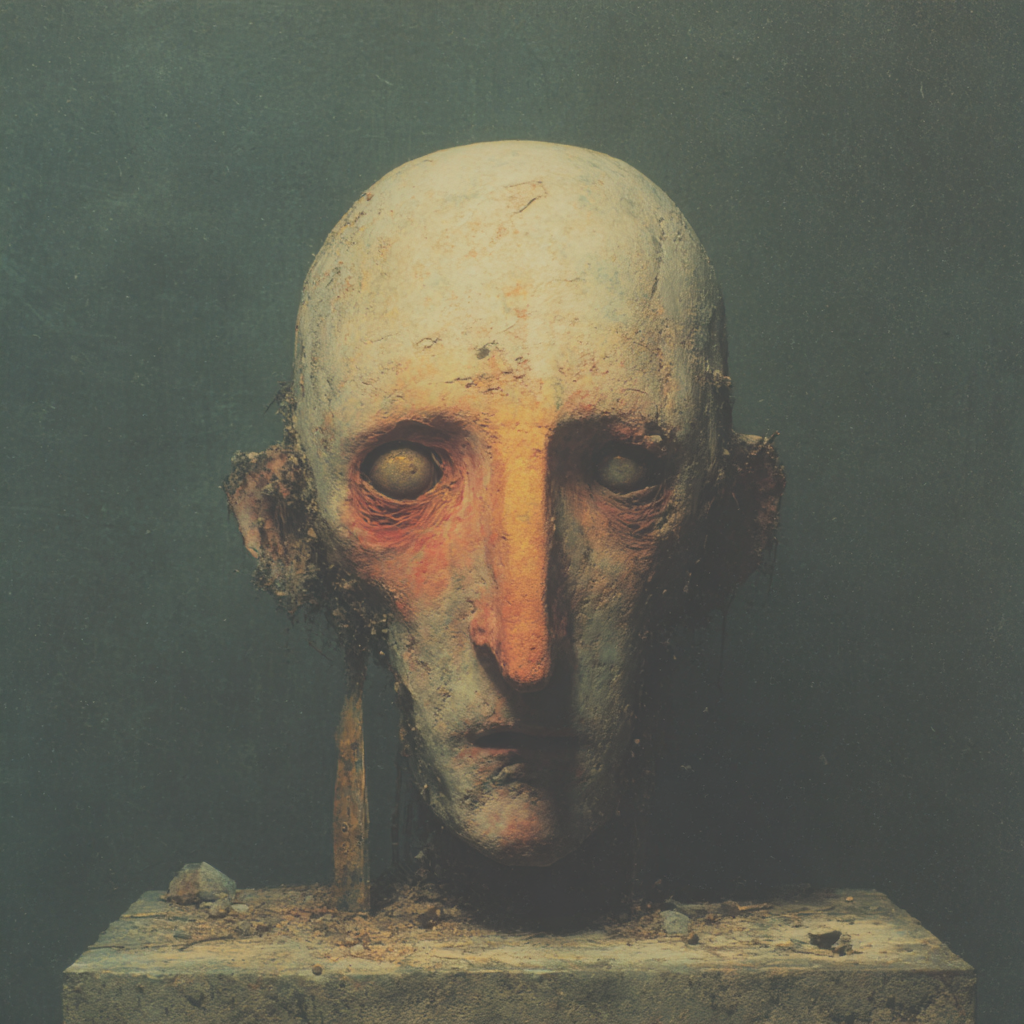
a face --p --v 7.0 --s 1000
There is no obvious content here, no point of view, just a way of viewing. Content enters when I instruct the machine to attend to some interesting facet of latent space, for instance:
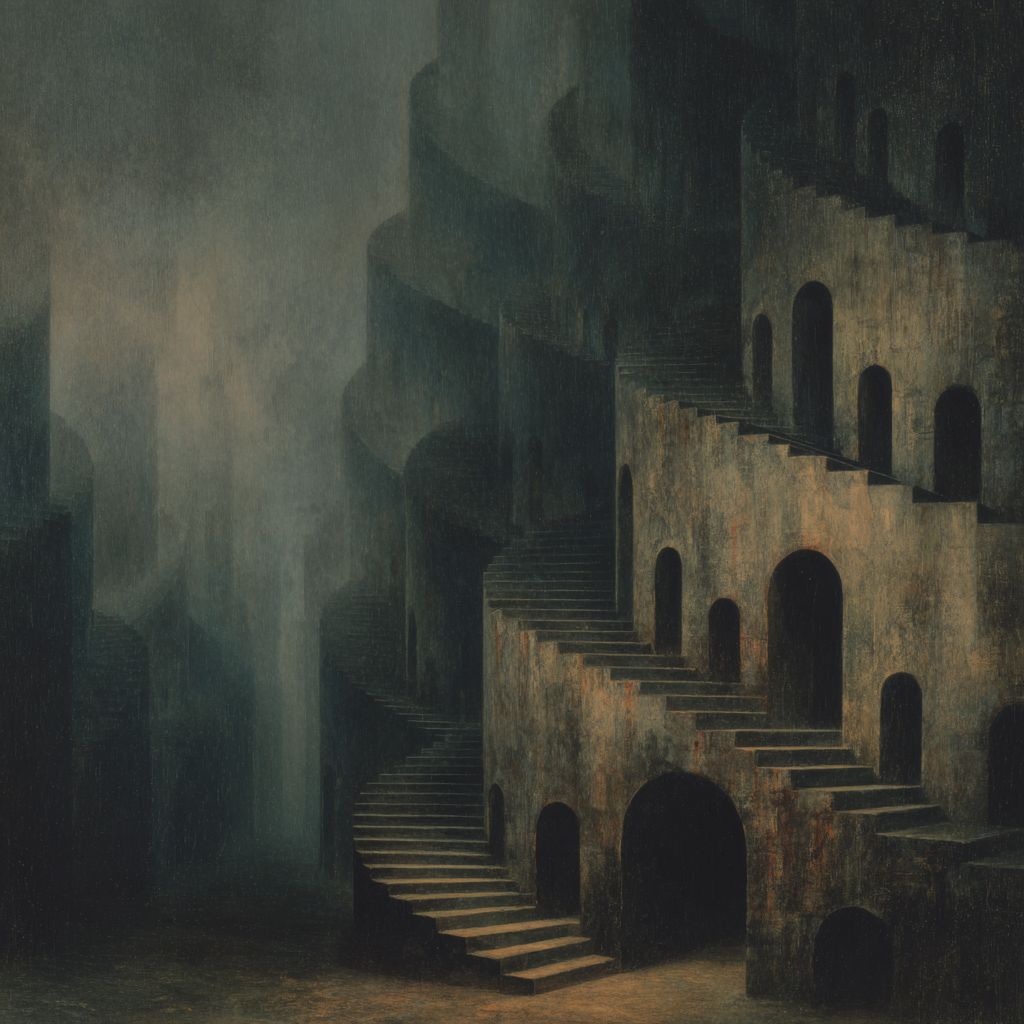
inside a Babel tower, climbing up and the stairs begin to shrink and wind in on themselves, massive storm outside, blackness suspended in air --p --v 7.0 --s 1000
This is a snippet of a dream I had twenty years ago. The combination of taste (form) and choice (perspective) leads to something which is uniquely and distinctively mine. The layered stairs and serried doorways, the sensation of ascent, the gloaming in the distance, all contribute to a real atmosphere and visual impact that I think probably constitutes art. Of course I am biased! But even if you find this picture cliche, you see how these ingredients might come together to form something with genuine artistic merit: an interesting point of view well-conveyed.
Other latencies
I finish by commenting on the interaction between two latent worlds: the one in the model and the one in our heads. For this, of course, is the latent space mined by traditional art, the weights and mechanisms of our neural apparatus rather than a generative model. When Paul Klee or Remedios Varo paint a picture, they are taking a snapshot of their own latent space; this is not so different from a photograph or a prompt except for the feedback loop between piece and medium that traditional methods emphasize at the cost of perspective and latency.
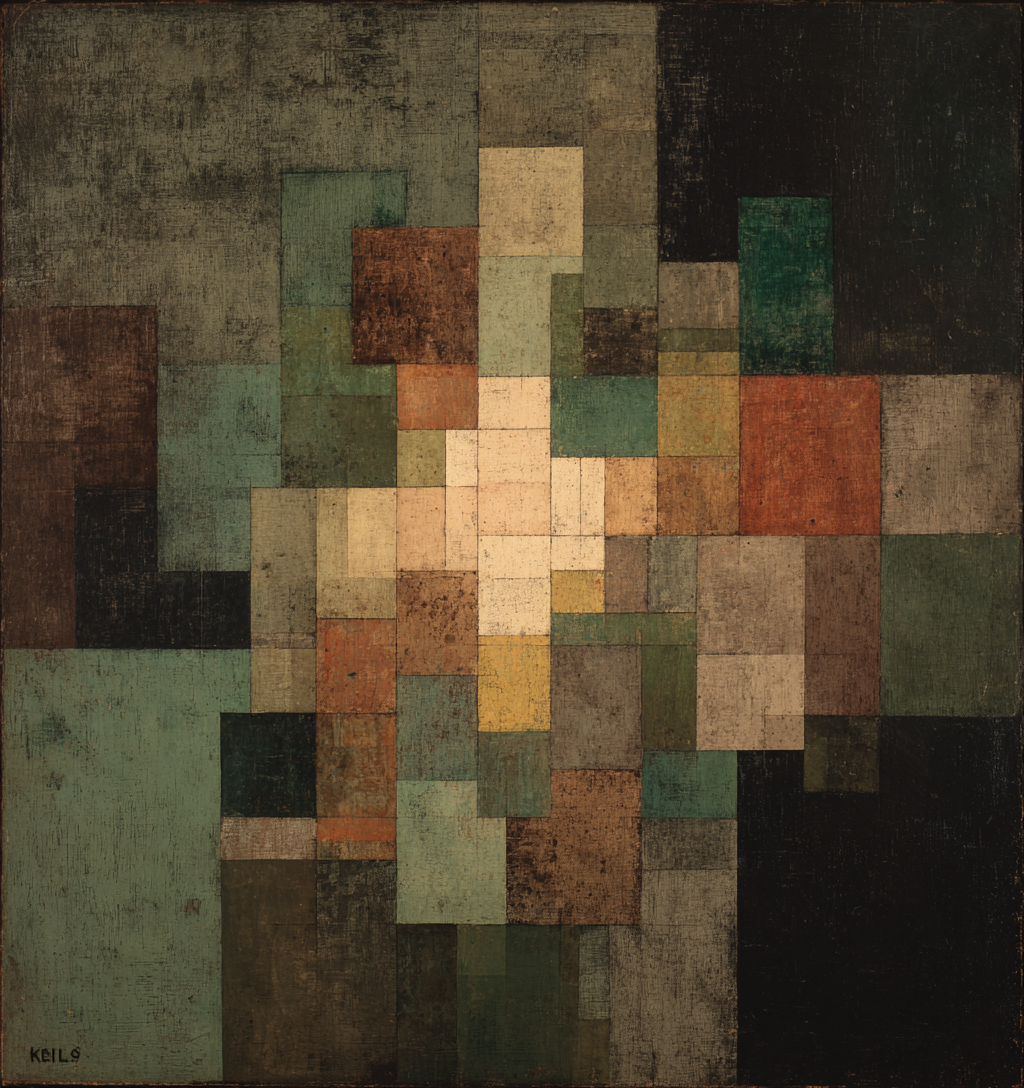
«lengthy description of an image of paul klee» --p --v 7.0 --s 1000
What I find most interesting is the ability to project some of our latent space into the machine, a sort of “aesthetic uploading” to use the framework of science fiction. (We can even reroute a piece of art through our own taste filters! Above, I describe a piece of Klee’s and render it using my personalized style.)
As mentioned above, personalization in Midjourney works as follows: the user makes a sequence of binary rating decisions that are overwhelmingly likely to be unique. This not only leads to a distinctive style, but what is more uncanny, contentful images which are unique to the individual. In other words, you may find fixations, obsessions, and haunting reappearing, without deliberate effort, from your latent content. This is more than a little disturbing, but I’ve chosen to mine it for information about myself, akin to the technique of active imagination propounded by Jung.
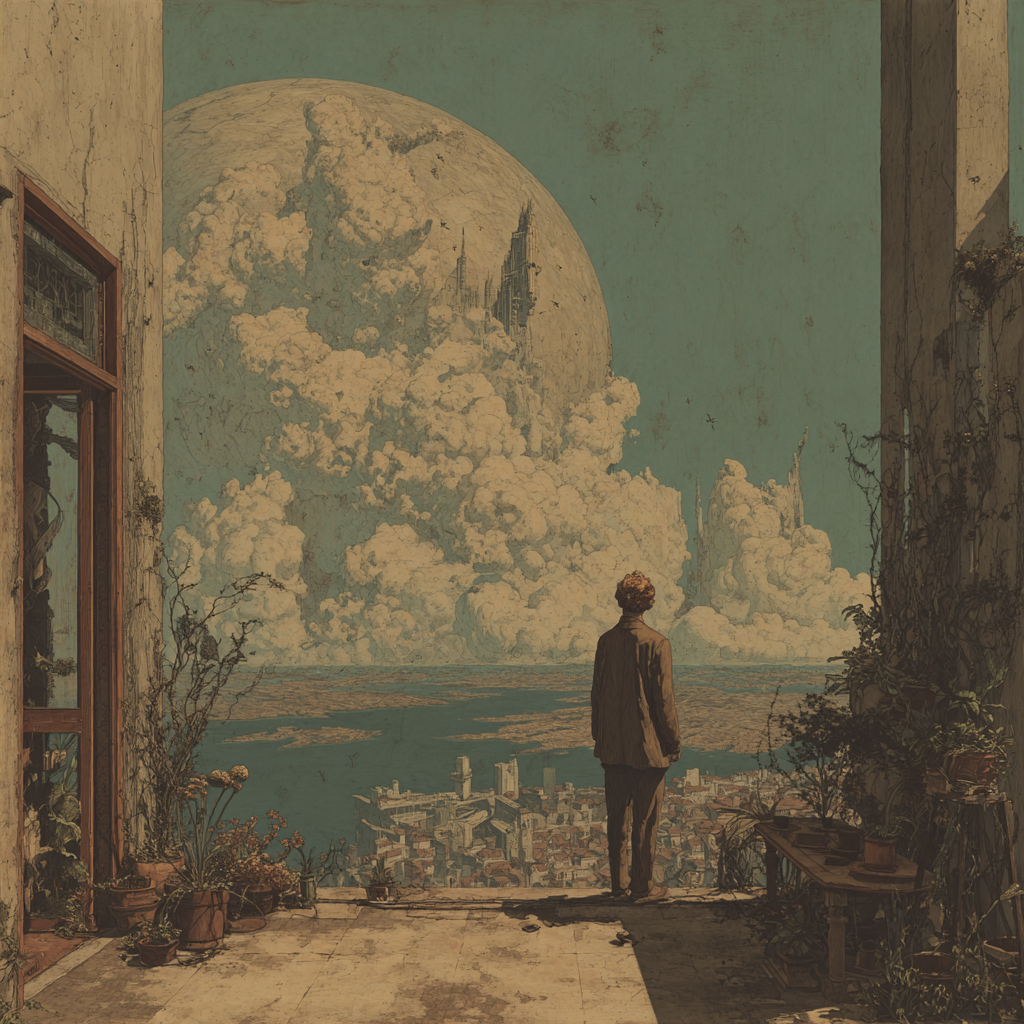
a dream --p --v 7.0 --s 1000
As an example, if I prompt “a dream” multiple times, sky-cities wrapped in cloud recur as a motif. It doesn’t take a psychoanalyst to see why. But the point is that personalization is not only a means of expression—of inflecting prompts with taste—but of self-insight. This is an unexpected echo of the truism that art tells us a lot about a person. Reversing the truism, if it can tell us a lot about ourselves, it might well be art.
Conclusion
It may seem like personalization is in tension with the objectivity of the latent space of the machine. But the personal latent is also objective, a fact Jung noticed long ago. The reason we respond to each other’s art is because, even though our brains are wired differently, there is a collective latent space, and with a little voluntary rewiring we can see from other perspectives and vibrate on nearby frequencies. Similarly, the machine has pockets of resonance we can settle in, mine, and share with others, and these resonant pockets may possess the qualities of art—interesting points of view well-conveyed—provided we have something interesting to say. If it’s lazy, unilateral slop-prompting, you have a Nikon-owner but no photographer; but AI art can, like photography, aspire to much more.